The Boots Group recognises its responsibility to address and mitigate the risk of modern slavery and human trafficking in its operations and supply chains. We recognise that this is an ever-evolving area of our commitments and will share any alignment to new regulations and industry best practices. This statement sets out our commitment to eradicating these abhorrent practices and describes the actions we have taken through the end of our fiscal year, 31 August 2025.
The Boots Group was formed on 28th August 2025 following the acquisition of Walgreens Boots Alliance (“WBA”) by Sycamore Partners in partnership with Stefano Pessina and his family.
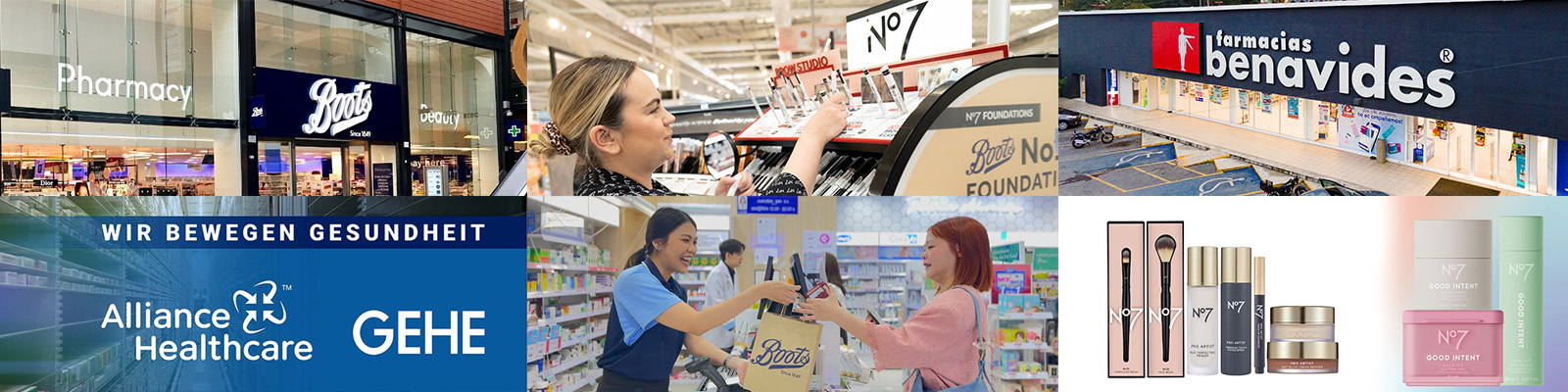
Operating across 11 countries – including the UK, Ireland, Thailand and Mexico – The Boots Group health and beauty retail businesses serve millions of customers and patients every day. In Germany, its pharmaceutical wholesale division stands as a key healthcare partner, providing essential services to pharmacies and pharmaceutical manufacturers nationwide.
A description of The Boots Group structure, values, divisions and product brands can be found in our annual Environmental, Social and Governance (ESG) Report on our website. ESG is embedded in our drive to operate both a sustainable and profitable enterprise and is at the core of our everyday work. Our ESG Committee is chaired by Chief Executive Officer, Ornella Barra. The ESG Committee meets regularly to review our ESG programmes, policy statements and progress, including our commitment to drive responsible sourcing practices throughout our supply chain, protecting human rights and engaging with suppliers around ethical and environmental issues.
The Boots Group’s permanent working group on modern slavery reports to the ESG Committee and is tasked with driving ongoing improvements and a consistent approach to the issue. The group is made up of representatives from across our businesses and led by a senior leader.
We recognise that the goal to eliminate modern slavery can be achieved only through long-term partnership and collaboration between businesses, nonprofit groups and governments. We are proud of our membership of organisations such as the United Nations Global Compact.
This statement meets the requirements of the UK Modern Slavery Act 2015 and the California Transparency in Supply Chains Act of 2010. It also reflects our alignment with updated UK Home Office guidance (March 2025) and acknowledges key legislative developments, including the European Union’s Forced Labour Regulation, Canada’s Fighting Against Forced Labour and Child Labour in Supply Chains Act (S‑211), and updates to the U.S. Uyghur Forced Labor Prevention Act. Where applicable, we also prepare jurisdiction-specific disclosures under Canada’s S‑211. In FY2025 we strengthened supplier screening for sectors identified by U.S. authorities as high priority under the UFLPA.
The Boots Group Code of Conduct and Ethics available on our website, provides the foundational standards for all aspects of our business and applies to all of our employees and operations globally.
These issues are also addressed in our Human Rights Policy Statement and in our Supplier Code of Conduct, which are published on our corporate website and which state our opposition to the exploitation of workers through any form of forced or bonded labour, slavery, human trafficking or other labour practices that involve harsh or inhumane treatment.
With regard to our own labour practices, The Boots Group Code of Conduct and Ethics and our corporate values of trust and inclusion set forth our standards for a diverse and inclusive workplace that provides a safe and healthy environment and that complies with or exceeds local law. The Boots Group Global Human Resources Policy requires an effective programme be in place to help address the reporting, investigation, and disposition of any potential modern slavery claims within our own business while also ensuring compliance with labour laws involving migrant and foreign national workers.
As we are a global company with businesses in many countries, local policies may provide additional guidance and detail on these issues. However, any local policies must meet or exceed the standards required by The Boots Group.
Regarding potential violations or concerns within our supply chains or our own workforce, our Code of Conduct and Ethics provides confidential reporting helplines managed by external service providers that can be used to report any concerns. These contact points are available 24 hours a day, seven days a week and in several languages. Any reports are thoroughly investigated.
As described above, The Boots Group’s permanent working group on modern slavery considers more fully our company’s risk of exposure to these practices and risk mitigation activities and oversees an ongoing action plan targeting the highest risk operations through a phased approach.
The Boots Group works with multiple service providers to facilitate risk and compliance due diligence reviews of business partners globally. These reviews may include active monitoring for adverse media regarding modern slavery and other issues.
Our commitment to eliminating modern slavery starts with focusing intensely on our owned brands supply chain where we source from over 550 approved supplier sites in more than 40 different countries as we believe this is where we can have the greatest impact. This includes maintaining and continually assessing and enhancing our well-established programme of supplier assessment, which is delivered through our own ethical trading auditors or a small number of pre-approved third-party assessment bodies. Our ethical trading experts across the globe meet on a regular basis to ensure the programme remains effective and drives best practices throughout our supply chain.
The assessment programme, developed over 10 years ago, helps ensure our owned brand suppliers are fully aware and act in accordance with our standards and expectations. This is achieved through a rigorous onboarding process, mandating suppliers to comply with ethical sourcing requirements throughout their supply chain (from raw materials to final production), contractual provisions that require our suppliers to follow applicable policies, including the supplier manuals, technical agreements, and mandatory ethical compliance assessments. Our onboarding process is supported by supplier training designed to explain our ethical standards and assessment requirements, share opportunities for suppliers to improve social and environmental compliance, and provide a forum for suppliers to raise questions. During FY2025, a total of 87 training sessions were completed by 79 suppliers.
The Boots Group has a risk-based auditing programme for all owned brand suppliers, which requires the agreement to participate in both announced and unannounced onsite audits, and provide evidence of their related compliance programmes, including a process for assessing the ethical standards of their own supply chains. Analysis of our assessment programmme shows levels of compliance with our ethical trading standards are significantly higher for existing sites than for new sites. This reinforces the importance of building supplier partnerships through engagement and transparency of our requirements to ensure ongoing commitment to not only maintaining our standards but improving working conditions across our wider supply chain.
Results of our ongoing assessment programme highlighting emerging trends, site and geographical region performance are shared monthly with members of The Boots Group’s senior management team. We also have in place a formal escalation process whereby any modern slavery “Zero Tolerance” violations or other serious violations of our standards which we become aware of are reported to the senior management team within 24 hours, along with the results of any investigation.
In FY2025, we conducted more than 300 ethical compliance assessments on new and existing suppliers for our Boots UK and No7 Beauty Company owned brands. Our assessment ratings are defined by the severity and/or number of incidents of non-compliance identified during the assessment process, these are currently defined as:
The following table provides a breakdown of assessments and outcomes during FY2025.
|
|
Fiscal Year 2025 |
Fiscal Year 2025 % |
|
Satisfactory |
199 |
62.8% |
|
Needs Improvement |
92 |
29.0% |
|
Critical |
26 |
8.2% |
|
Zero Tolerance |
0 |
0% |
|
Total |
317 |
100% |
Our policy in cases of Zero Tolerance violations is to terminate the business relationship with the site where the violation occurred and to suspend the supplier and its other sites pending a full investigation of the supplier and its supply chain. If the supplier is directly involved in the Zero Tolerance violation, or if further violations are found, the business relationship with the supplier will be terminated. For suppliers where we identify critical non-compliance issues, they are required to develop and implement immediate remedial action plans to address the identified non-compliances; verification of the effectiveness of the actions taken is monitored via submission of evidence and through on-site reassessments. In the small number of cases where suppliers are unwilling to work with us to achieve compliance within an agreed time frame, we maintain the right to end the business relationship and cancel outstanding purchase orders. However, simple termination of a contract relationship may not always be the most appropriate response. We recognise that in the event of non-compliance, withdrawal of our business may cause severe hardship to those employed and we will therefore attempt to work with our vendors through a remediation programme to achieve ongoing compliance.
We want to work with suppliers who are open and transparent, and to reinforce this commitment, we request that our owned brand suppliers agree to unannounced assessments at any time that they are operating.
Risk mapping and horizon scanning help us identify and understand potential modern slavery and human rights risks within our supply chain. During FY2025 we implemented year 2 of our supply chain transparency programme, focused on products containing cotton. Due to the ongoing risk of forced labour, suppliers are now required to provide beyond tier 1 supply chain information with corresponding random product testing by a leading third party testing lab, using forensic isotope testing to verify the geographical origin of the cotton our suppliers use.
Goods Not for Resale (GNFR) refer to products or services used to support business operations. Our businesses partner with external providers to support our assessment of ethical standards compliance within our GNFR supply chain. This assessment focuses on new and existing GNFR suppliers. New suppliers with qualifying spend above a review threshold are assessed prior to onboarding and then actively monitored for a minimum of one year.
We operate a company-wide training initiative to drive ethical sourcing practices across our team members responsible for the sourcing of goods and services, expanding this training to include select The Boots Group employees globally in human resources who support our international and owned brand divisions, including senior management. Training includes the human rights impact of modern slavery, our compliance hotline and reinforces The Boots Group expectations to meet our company standards. In FY2025, we refreshed training content to include updated UK guidance, UFLPA sector-specific requirements, and Canada’s S‑211 reporting obligations. More than 4900 team members who work in procurement, compliance or related areas were in scope of this training and we achieved an overall completion rate of 92 percent.
We recognise that the risks from modern slavery change, and as such our approach to preventing modern slavery is expected to be reviewed annually by The Boots Group permanent working group on modern slavery. This approach will monitor and review:
This statement is made pursuant to the relevant legal requirements of the United States (including the individual states and territories therein), The United Kingdom, and The European Union and covers The Boots Group subsidiaries listed here.
This statement has been reviewed and approved by The Boots Group ESG Committee.
Ornella Barra
Chair of the Board of Directors and Chair of the ESG Committee
(updated February 2026)